
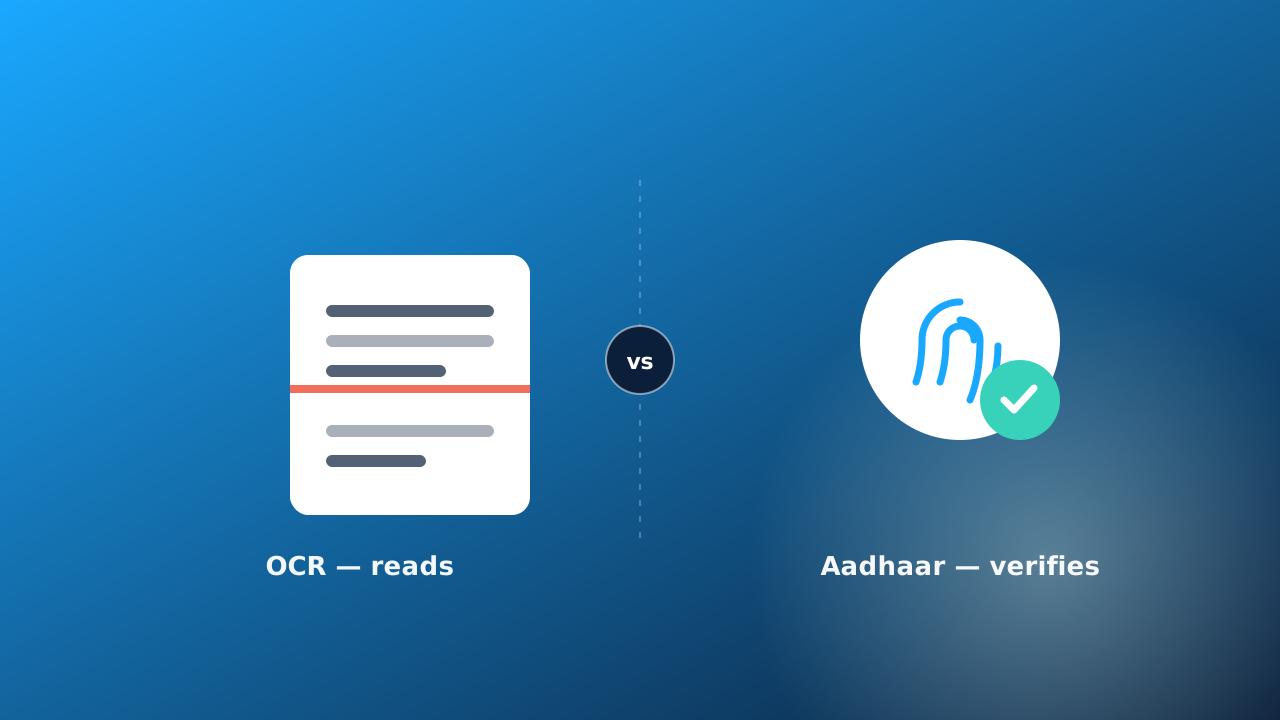
Two approaches often get lumped together as “KYC” or “ID verification,” but they are very different in how much assurance they give: OCR-based verification and Aadhaar verification. Knowing the gap helps you avoid trusting a result that was never really verified.
What OCR-based verification really is
OCR (optical character recognition) reads text off a photo of a document — a PAN card, a driving licence, an Aadhaar letter. It extracts fields like name and number. But it only reads the image; it does not confirm the document is genuine or that it belongs to the person presenting it. A doctored image can pass.
What Aadhaar verification does differently
- Source-verified: the check goes to UIDAI (online) or validates a UIDAI-signed credential (offline).
- Assurance: an OTP or a digital signature proves authenticity, not just legibility.
- Name-match scoring against your expected record.
- Live Face matching to the photo in the verified record.
Side by side
- Forgery: OCR can be fooled by an edited image; signed/OTP verification cannot.
- Accuracy: OCR mis-reads characters; source verification returns clean attributes.
- Auditability: source verification gives a defensible result; OCR gives a guess.
Where OCR quietly fails
OCR's weaknesses are easy to miss in a demo and expensive in production:
- Forgery: edit the image, change a digit or a name, and OCR happily reads the altered text as fact.
- Misreads: glare, low resolution, regional fonts and handwriting cause silent character errors.
- No source of truth: even a perfectly-read document is never checked against the issuing authority.
- No liveness: nothing ties the document to the person presenting it — a borrowed or stolen ID passes.
Why the difference matters for entry and KYC
When the output decides who gets through a gate or who opens a financial account, a 'probably right' read isn't enough. For BFSI / NBFC KYC it's a compliance and fraud exposure; for plant, pharma and data-centre entry it's a security and audit gap. Source-verified results are defensible; OCR results are a guess you have to stand behind later.
Can you combine them?
Yes — and it's a sensible pattern. Use OCR to pre-fill fields and speed up data entry, then verify the identity at source with Aadhaar (and DigiLocker for documents). OCR for convenience, verification for trust — never OCR alone where assurance matters.
When is OCR good enough?
OCR is fine for low-risk convenience — pre-filling a form to save typing, or sorting documents. It is not a substitute for verification when access, money or compliance is on the line. The test is simple: if a wrong answer creates real risk, you need verification, not recognition.
Certopact's approach
Certopact is source-verified by design: Aadhaar visitor verification online (AUA/KUA) or offline (OVSE), with DigiLocker and Live Face — not OCR guessing. It's a natural fit for BFSI / NBFC KYC and any higher-assurance entry. Explore Certopact Entry.