
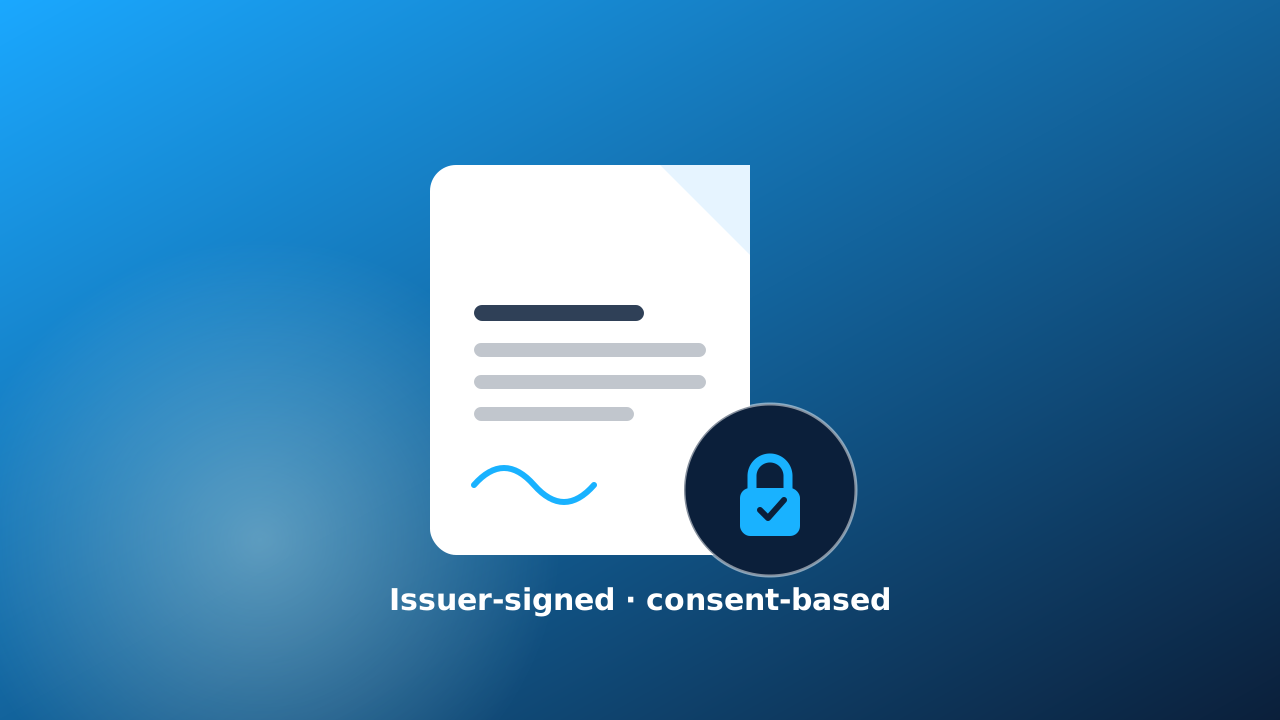
DigiLocker is India's government-backed digital document platform, operated under MeitY. It lets residents hold and share issuer-issued documents — and that makes it a powerful, often under-used tool for enterprises that need to verify documents quickly and authentically.
How DigiLocker verification works
Instead of accepting an uploaded scan, you receive the document directly from DigiLocker with the resident's consent. Because the document is issued and digitally signed by the source authority, you can trust it is genuine and unaltered:
- Issuer-signed: documents come from the issuing authority, carrying a digital signature.
- Consent-based: the resident chooses to share the specific document with you.
- Tamper-evident: a signed document fails verification if it has been edited.
Why it beats photocopies and OCR
- A photocopy or scan proves nothing about authenticity and is easy to forge.
- OCR only reads text off an image — it doesn't confirm the document is real.
- DigiLocker gives you a source-verified document, not a guessed one.
Where enterprises use it
- Customer KYC and onboarding for BFSI, NBFCs and fintechs.
- Employee and contractor onboarding.
- Visitor and vendor document checks at higher-assurance sites.
Privacy and consent
DigiLocker sharing is consent-led and purpose-specific, which fits the expectations of the DPDP Act — see the DPDP Act and visitor data. You collect the document you need, for the purpose you stated, with a clear consent trail.
DigiLocker in Certopact Entry
Certopact Entry combines DigiLocker document verification with Aadhaar visitor verification (online AUA/KUA or offline OVSE), name-match scoring and Live Face — so you can verify both identity and documents from one flow. This is general information, not legal advice.