
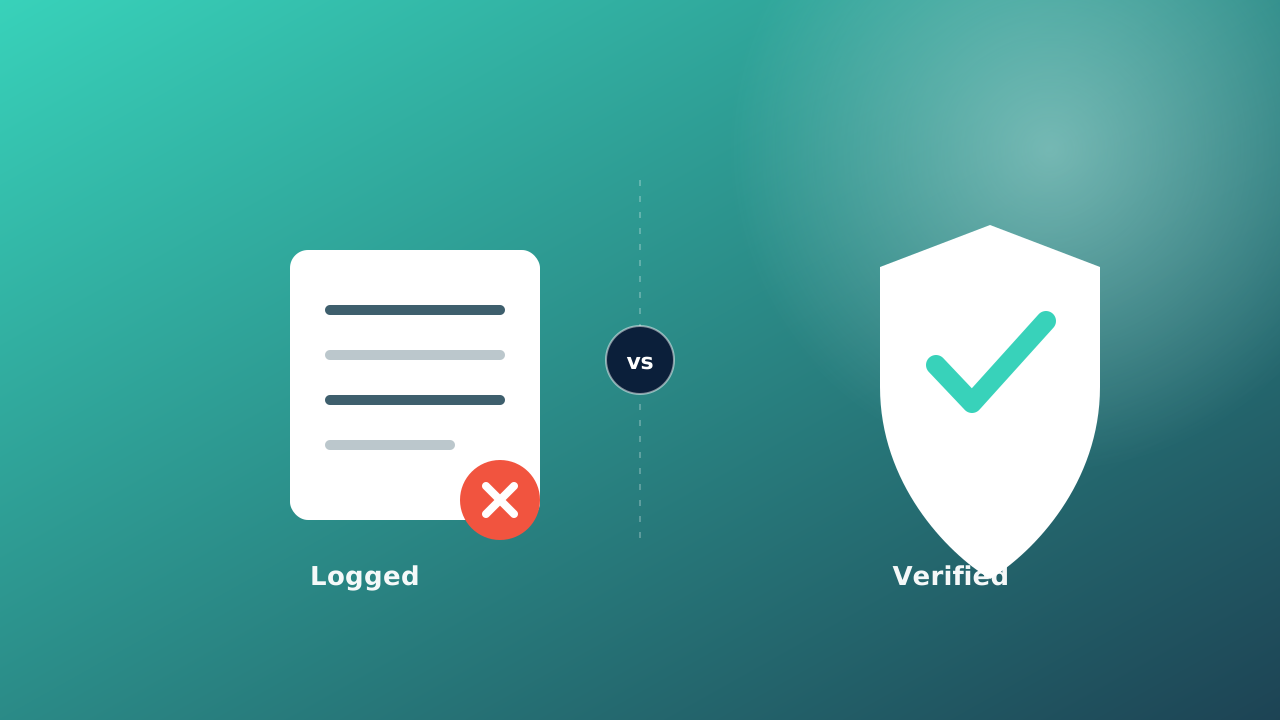
Most front desks still run on a logbook or a basic sign-in app. It feels like a control — there's a record, after all. But a record of what someone wrote down is not proof of who they are. Confusing the two leaves a real gap between what your visitor log says and what actually happened.
What a logbook actually captures
A logbook (paper or digital) captures a claim: the name, company and phone number a visitor chose to write. Nothing checks that the claim is true. A wrong number, a fake name or a borrowed identity all pass without friction — and you won't know until it matters.
What verification adds
Identity verification confirms the claim against an authoritative source before you grant access. Instead of trusting what's written, you check it:
- Source check — verify the person against Aadhaar / DigiLocker, not a handwritten entry.
- Tamper-evident — a UIDAI-signed credential fails if it's been forged or altered.
- Name-match scoring — flags mismatches a quick glance would miss.
- Live Face — matches a live selfie to the photo in the verified record.
The risk of logging only
- Impersonation: anyone can write anyone's name.
- No defensible audit trail when security or compliance asks who was really on site.
- Data exposure: an open logbook shows one visitor's details to the next.
A digital sign-in app isn't verification either
Swapping the paper book for a tablet feels modern, but most check-in apps still just record what the visitor types. The data is neater, searchable and time-stamped — yet the core problem is untouched: nobody has confirmed the person is who they claim to be. Tidier logging is still logging. The moment identity actually matters — an incident, an audit, a banned visitor returning — a self-typed entry tells you nothing you can rely on.
The hidden costs of logging only
Logging-only feels cheap because the cost is deferred, not avoided. It shows up later as security exposure (you can't prove who entered), compliance risk (no defensible audit trail, and an open book that leaks one visitor's data to the next), and operational drag (manual registers that nobody can search when it counts). For regulated sites — plants, pharma, BFSI, data centres — that gap is exactly what an auditor probes.
What real verification looks like
Verification replaces trust with proof. In India that means checking the visitor against an authoritative source and tying the credential to the person standing in front of you:
- Aadhaar verification — online via a UIDAI-certified AUA/KUA (OTP), or offline via OVSE (secure QR / Paperless e-KYC) where connectivity is poor.
- DigiLocker — pull issuer-signed documents directly, instead of accepting a photocopy.
- Name-match scoring — compare the verified name to your expected record and escalate mismatches to a person.
- Live Face — match a live selfie to the photo in the signed record, so the credential can't simply be borrowed.
- Restricted Visitor screening — flag previously barred visitors at the door.
Moving from logging to verification
You don't have to rip everything out to close the gap. Pre-register expected visitors so arrival is a quick confirmation, verify identity at the gate or desk — online or offline depending on the site — and keep a consent-based, exportable log. You end up with the same clean record you have today, but with a real identity behind every row, handled in line with the DPDP Act.
Logging and verification, together
You want both — a clean visit record and a verified identity behind it. Certopact's visitor management system handles the visit (pre-registration, check-in, approvals, badges, log), and in India you can add Aadhaar visitor verification so each entry is backed by a real identity check, not just a signature. Explore Certopact Entry for the verification engine behind it.